The garland threaders are working before the traffic is. By seven on a September morning the flower shops on Campbell Lane are ankle-deep in marigold heads, the first biryani pots are already on at Tekka, and Serangoon Road smells of jasmine, cardamom and diesel in roughly that order. Six hours later the same stretch of pavement will be a slow-moving wall of shoulders. Which of those two versions you get is mostly a matter of what time you arrive.
What you are actually walking into
Little India is a working district first and a place visitors come to second. That order explains the opening hours, the crowds, the manners expected of you, and why the best hour of the day here is one most travellers sleep through.
The geography is simple. Serangoon Road is the spine, running roughly northeast from the Rochor end up past Farrer Park. Race Course Road runs parallel to the west and holds most of the big restaurants and two of the temples. Between them, a ladder of short lanes (Campbell Lane, Dunlop Street, Kerbau Road, Buffalo Road, Syed Alwi Road) carries the shops, the arcade and the photographs. You can walk the full spine end to end in about twenty-five minutes without stopping, which nobody does.
The MRT does the work for you. Little India station sits on both the North East and Downtown lines and drops you at the Tekka end. Rochor is the southern door, Farrer Park the northern one, and Jalan Besar station puts you within a few minutes of the coffee and the beer at the eastern edge. If you are staying central, you are ten to fifteen minutes away on a train and there is no sensible reason to take a taxi into these streets at a weekend.
Budget half a day for the essentials and a full day if you intend to eat properly and browse. The district rewards a second visit at a different hour more than it rewards a long single one.
An hour indoors first
Start at the Indian Heritage Centre (Campbell Lane, a minute from Little India MRT). It is the only air-conditioned, sit-down explanation of why this district exists at all: how the labour, trade and devotion that built it arrived here, and why the streets outside are arranged the way they are. Do it first and the colour outside stops being only colour.
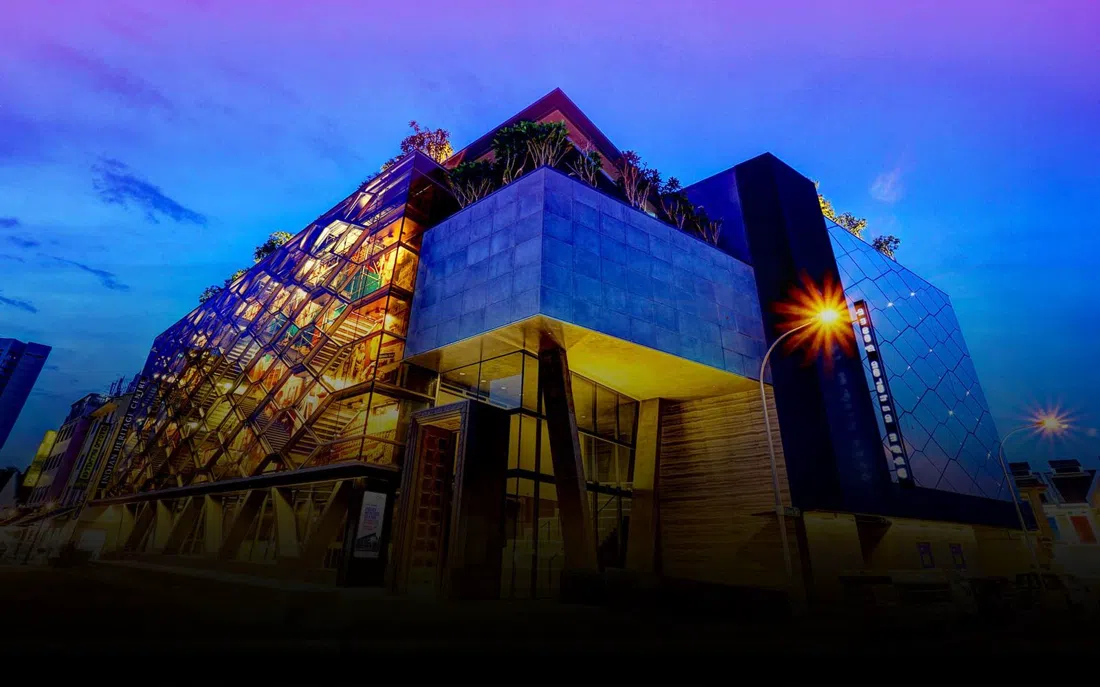
Entry is free for locals and around S$5 for an overseas adult, S$4 for students, free for visitors aged 60 and over. Free guided tours run on set days, and parties over about fifteen should arrange a visit in advance rather than turning up as a block. It is closed on Mondays, and last entry is 5.30pm, so it does not work as an end-of-day stop.
Allow forty-five minutes to an hour. Couples and solo travellers can do it faster; anyone travelling with children will want longer.
Three temples, a mosque, and the one that shuts at half four
Sri Srinivasa Perumal Temple (Race Course Road, near Farrer Park MRT) is a National Monument and the start point of the Thaipusam procession. It is quieter and considerably roomier than its famous neighbour, and the big courtyard absorbs a coach party better than anywhere else in the district. If you are more than a handful of people, make this your first temple, not your second. Entry is free.
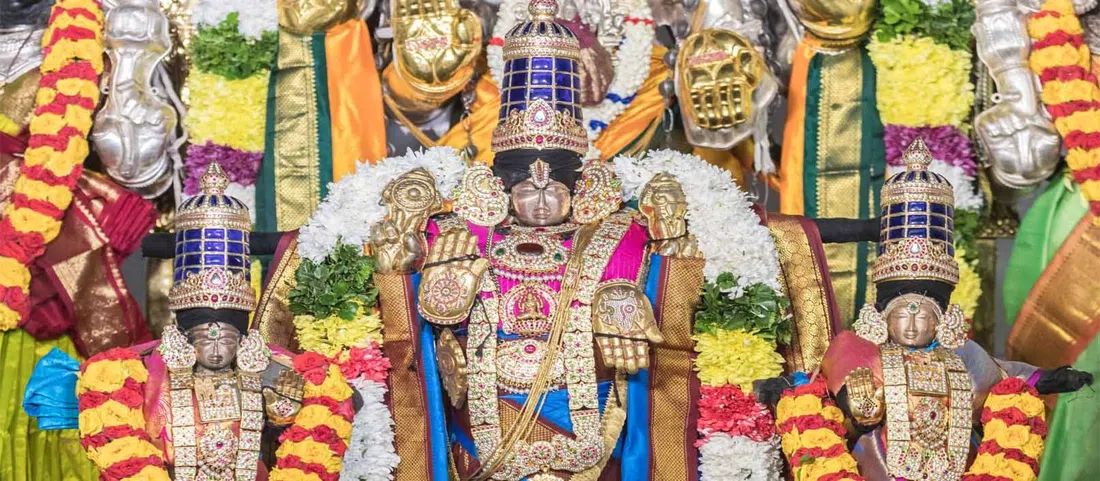
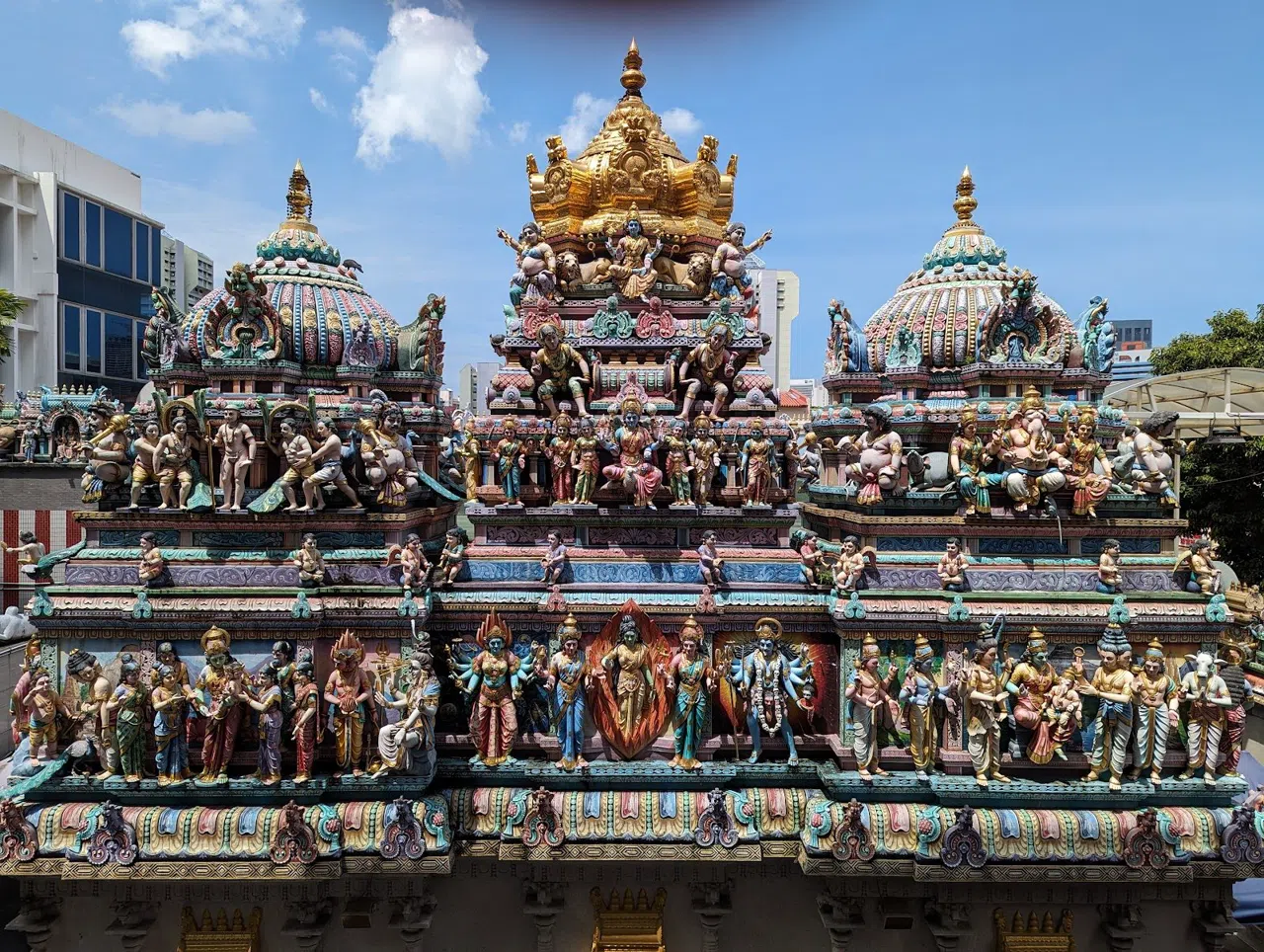
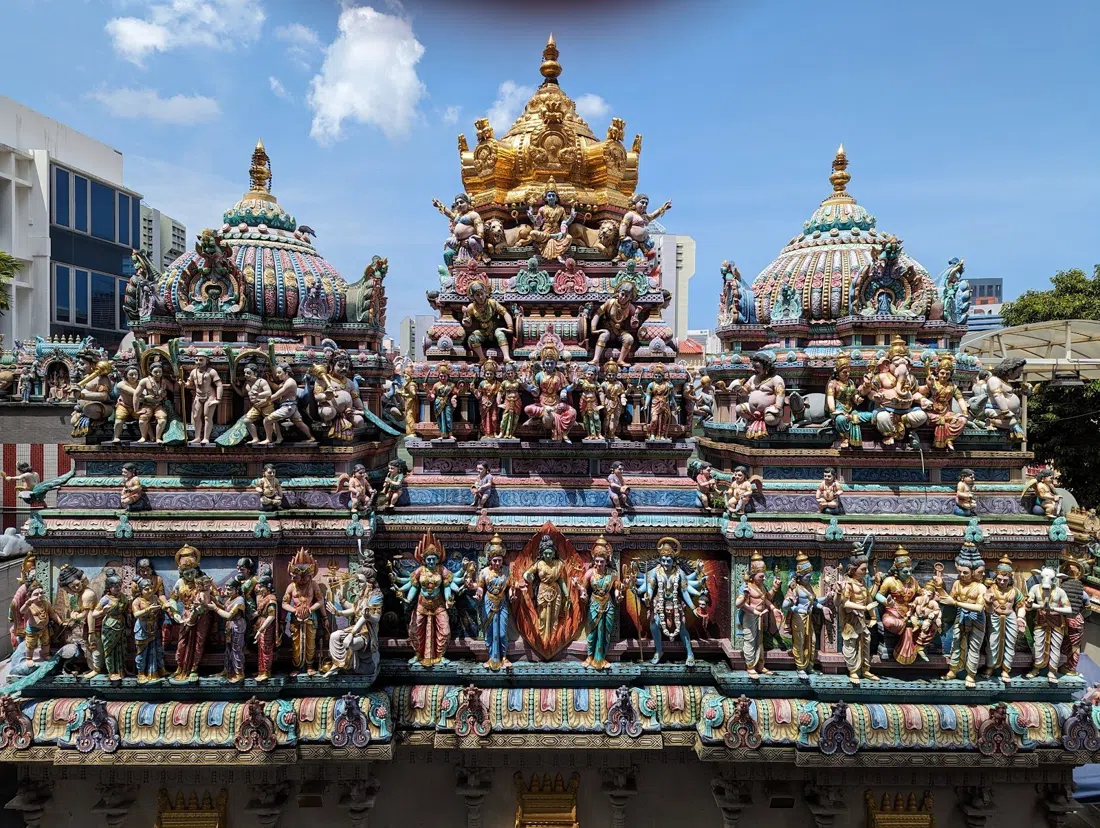
Sri Veeramakaliamman Temple (Serangoon Road) is the most photographed building in Little India and the one at the centre of its religious life. Shoes off, shoulders and knees covered, phones down in the sanctum. It is free to enter, with a donation box and a small charge if you are shooting seriously with a camera. Timing is the courtesy that matters: stay back during the midday and evening pujas, which are acts of worship rather than something staged for the doorway. Guides bringing groups should keep parties small and silent inside; the forecourt is where a larger group waits.
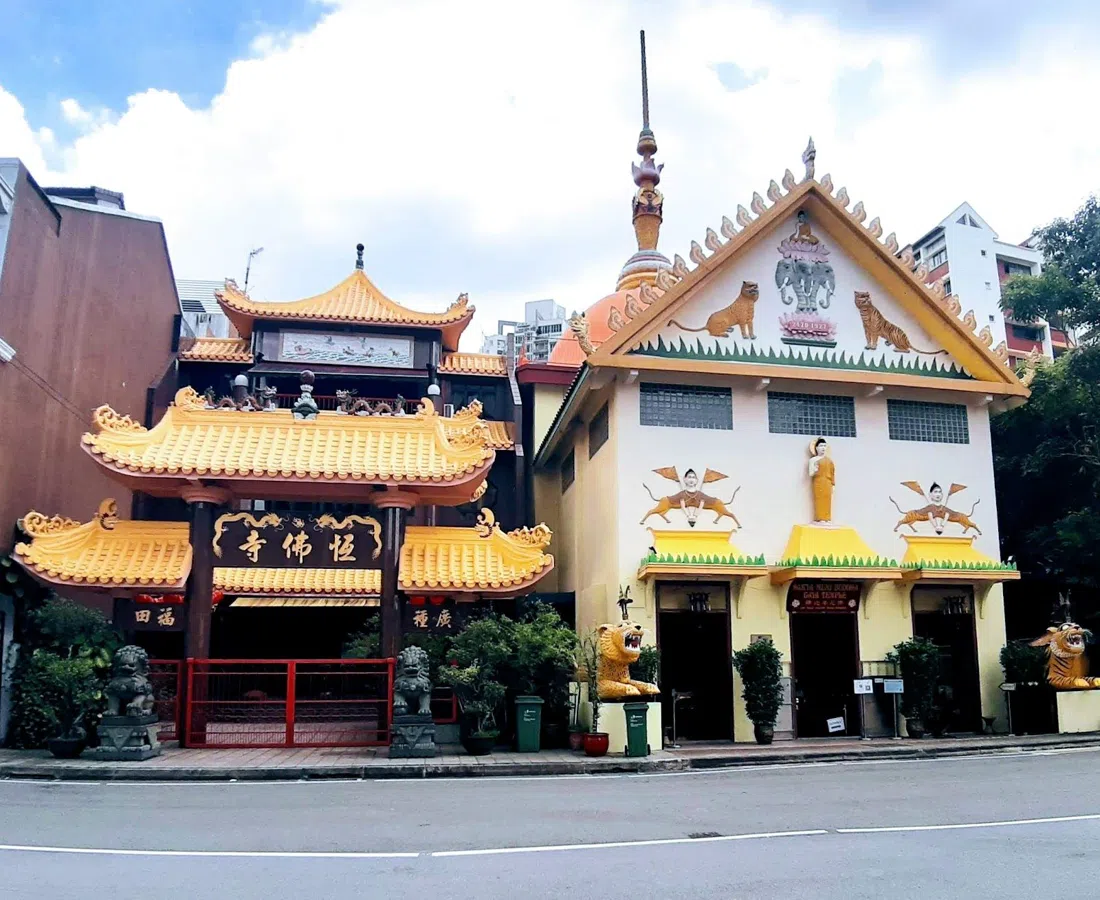
Sakya Muni Buddha Gaya Temple (Race Course Road), better known as the Temple of 1000 Lights, is the stop that proves Little India was never only Hindu. Thai-founded in 1927, open door, no booking, free apart from a donation for the light-switch offering. The hall is small, so enter in waves rather than as a crowd, and take your shoes off at the step. Its hours are roughly 8am to 4.30pm, which makes it the one place here that closes before your evening curry, so build it into the morning or you will miss it.
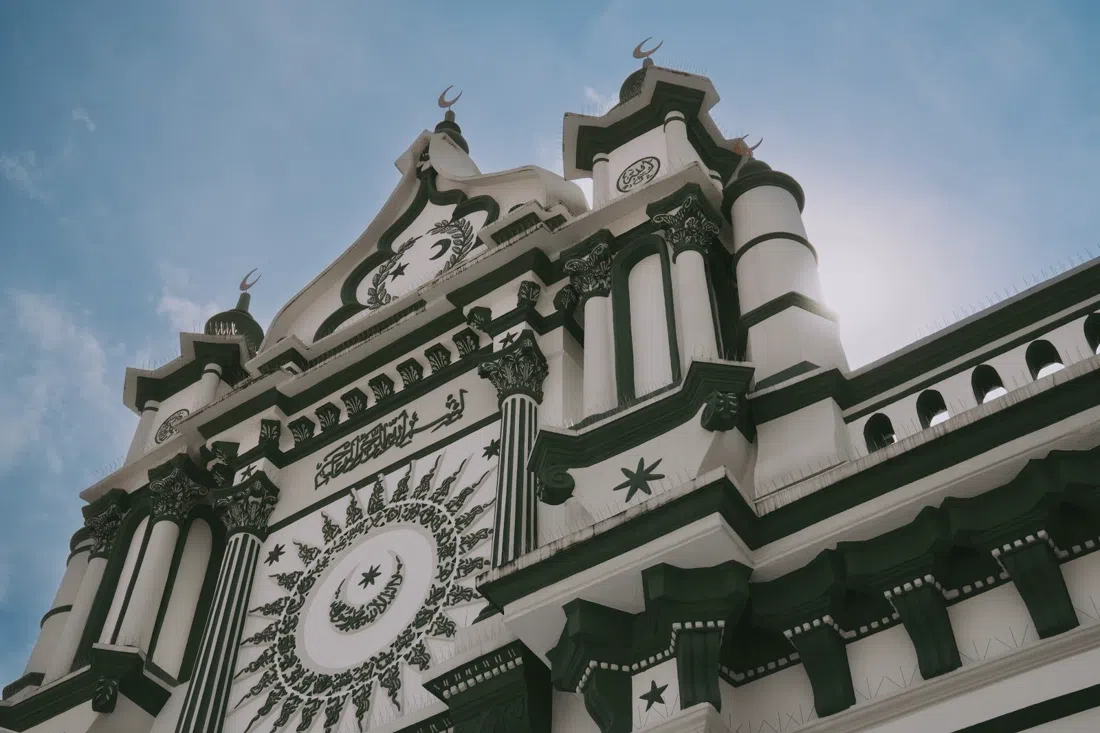
Masjid Abdul Gafoor (Dunlop Street) has a calligraphed sundial-style arch that has no equal in Southeast Asia, and the narrowest access window of anything in this guide. Non-Muslim visitors are welcome roughly 10am to 12pm and 2pm to 4pm, Saturday to Thursday, and not at all on Fridays. Robes are loaned at the door, photography is a question you ask rather than assume, and groups should keep their voices down in the courtyard. Plan it before the food, not after.
Where the district is still doing its own work
Tekka Centre (Buffalo Road, at the Serangoon Road junction) is the wet market and hawker centre at the southern end, refurbished in 2023 and busier since. Downstairs is biryani, murtabak and teh tarik from about S$4 to S$10 a plate; upstairs is textiles. There are no reservations anywhere in the building and there never will be. Come between 6.30am and 9am if you want the market doing its actual job (fish, goats' heads, coriander by the armful) rather than the mid-morning tourist version. At peak lunch, groups over four should split across tables rather than hunt for one long one.
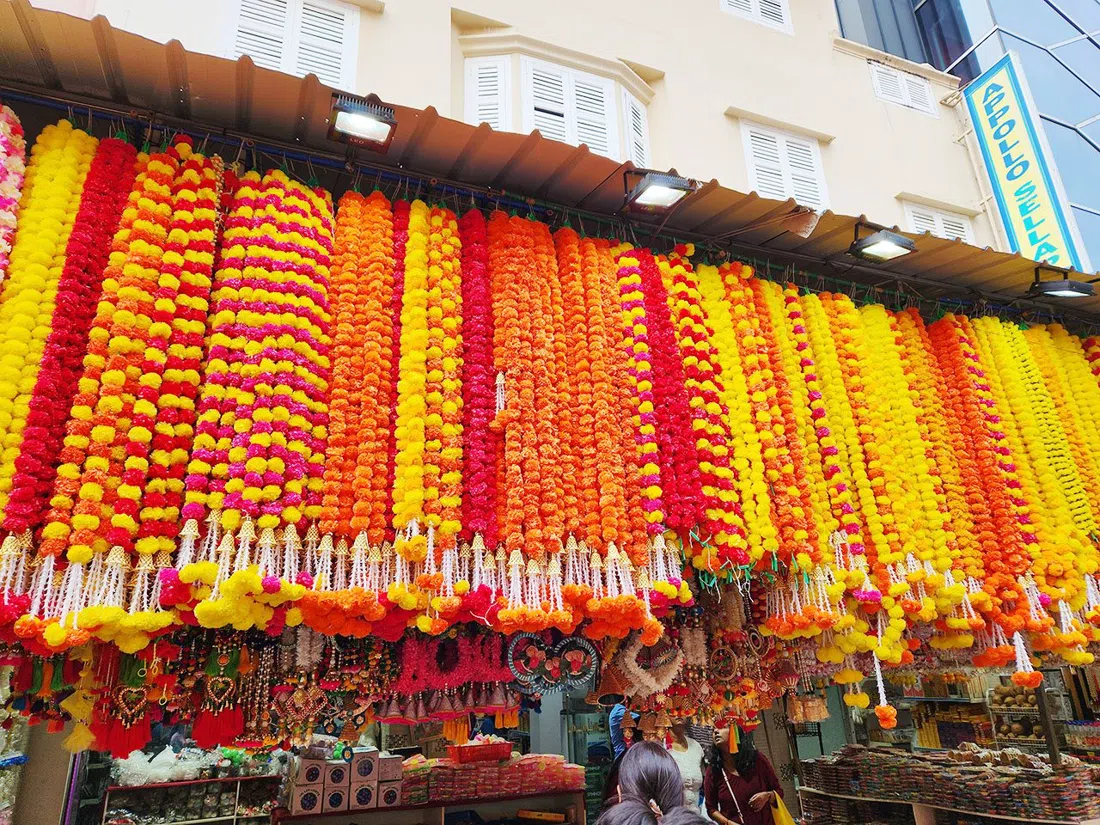
Jothi Store & Flower Shop (Campbell Lane) has been family-run since 1960 and still threads garlands in the doorway, which is the one piece of working, devotional Little India that a visitor can stand next to without intruding on anyone's prayer. Garlands run from about S$3 to S$15. It is a small retail counter: send two people in, watch from the pavement, and do not fill the shop with ten.
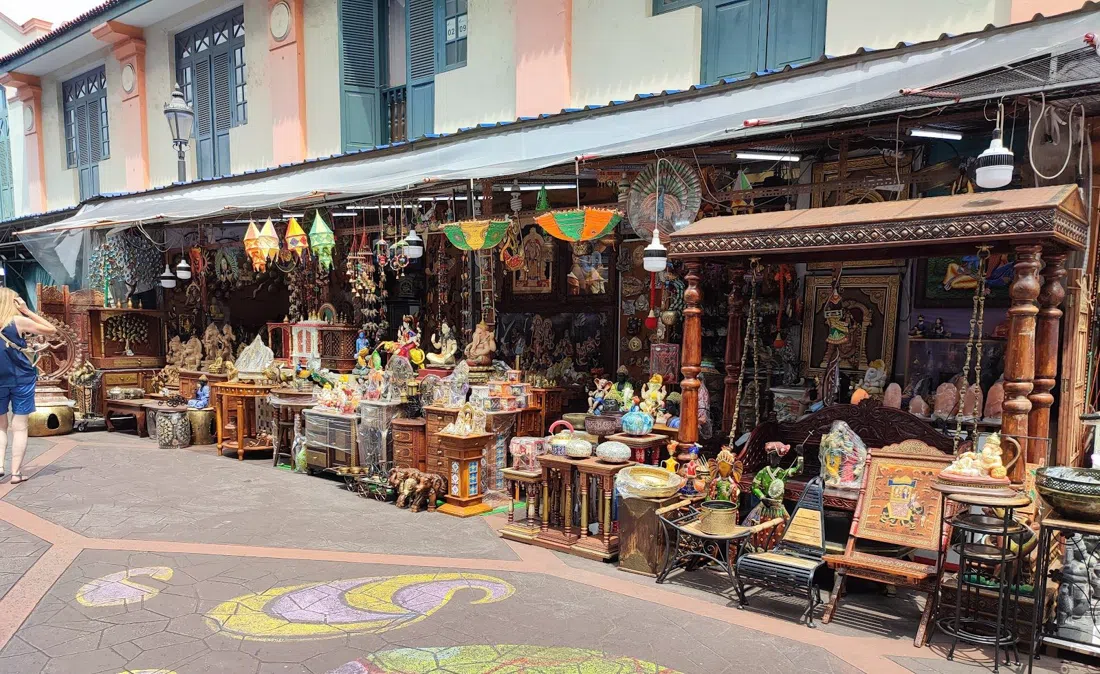
Little India Arcade (Campbell Lane) is the district concentrated into one building: bangles, spices, sweets and henna under one roof, henna from about S$10 and souvenirs between S$5 and S$30. Walk-in only. The internal lanes are effectively single-file at weekends, so a party of eight will spend the visit queueing for each other; it suits an hour when you have no appetite for the full street grid.
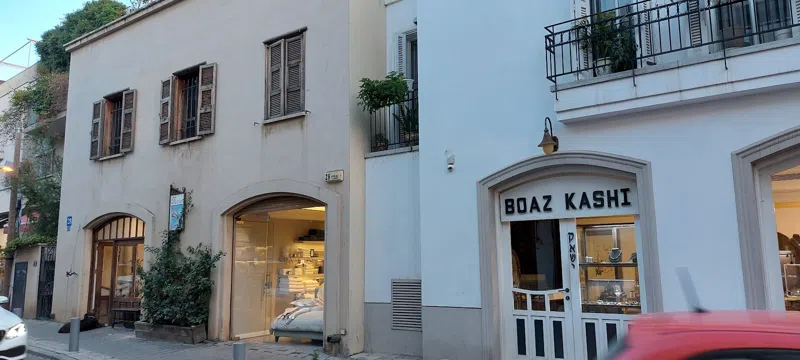
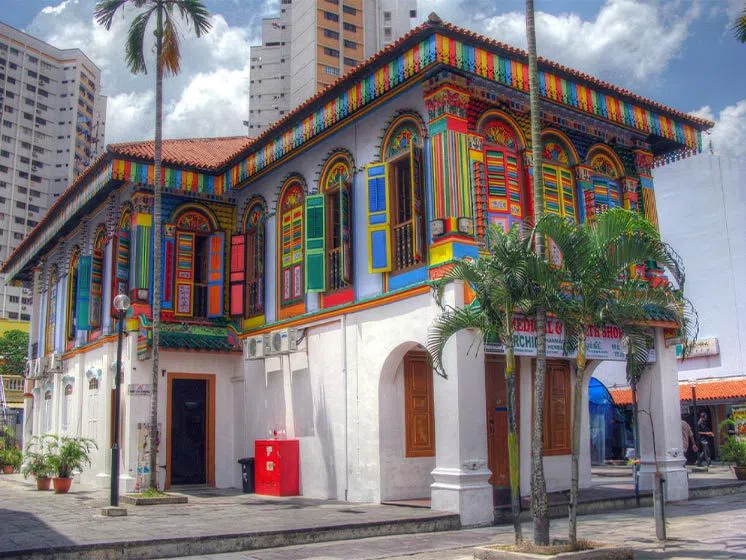
The Former House of Tan Teng Niah (Kerbau Road) is the last surviving Chinese villa in Little India and the district's signature photograph. It is exterior only, since the building is privately occupied, and the pavement in front is narrow enough that more than six people block it, which the shopfront tenants notice immediately. Early morning light hits the facade best, and at that hour the parked cars have not arrived to sit in your frame.
Sunday is the district at full volume
From late morning onwards Little India fills with the people who live and work across the island and come here on their day off, and by late afternoon the pavements around Tekka, the arcade lanes and the Serangoon Road crossings are moving at a shuffle. Nothing about it is unpleasant, and it is the most alive the district gets all week.
It is also a poor day for photographs or for a group of more than four, and a difficult one for anyone with a pushchair or a mobility aid. If your trip only allows a Sunday, come at seven in the morning, do the temples and the villa before ten, eat early, and return after nine at night when the crowd has thinned but the shops have not shut. If you have a choice of days, take a weekday morning and come back on Sunday evening for the atmosphere alone.
Eating without overthinking it
The Banana Leaf Apolo (Race Course Road) is the benchmark fish-head curry and the easiest banana-leaf meal for a first-timer or a mixed group: long-table friendly, used to tour parties, and no cutlery needed, though plenty is supplied. Around S$20 to S$40 a head. Book ahead for six or more at weekend lunch.
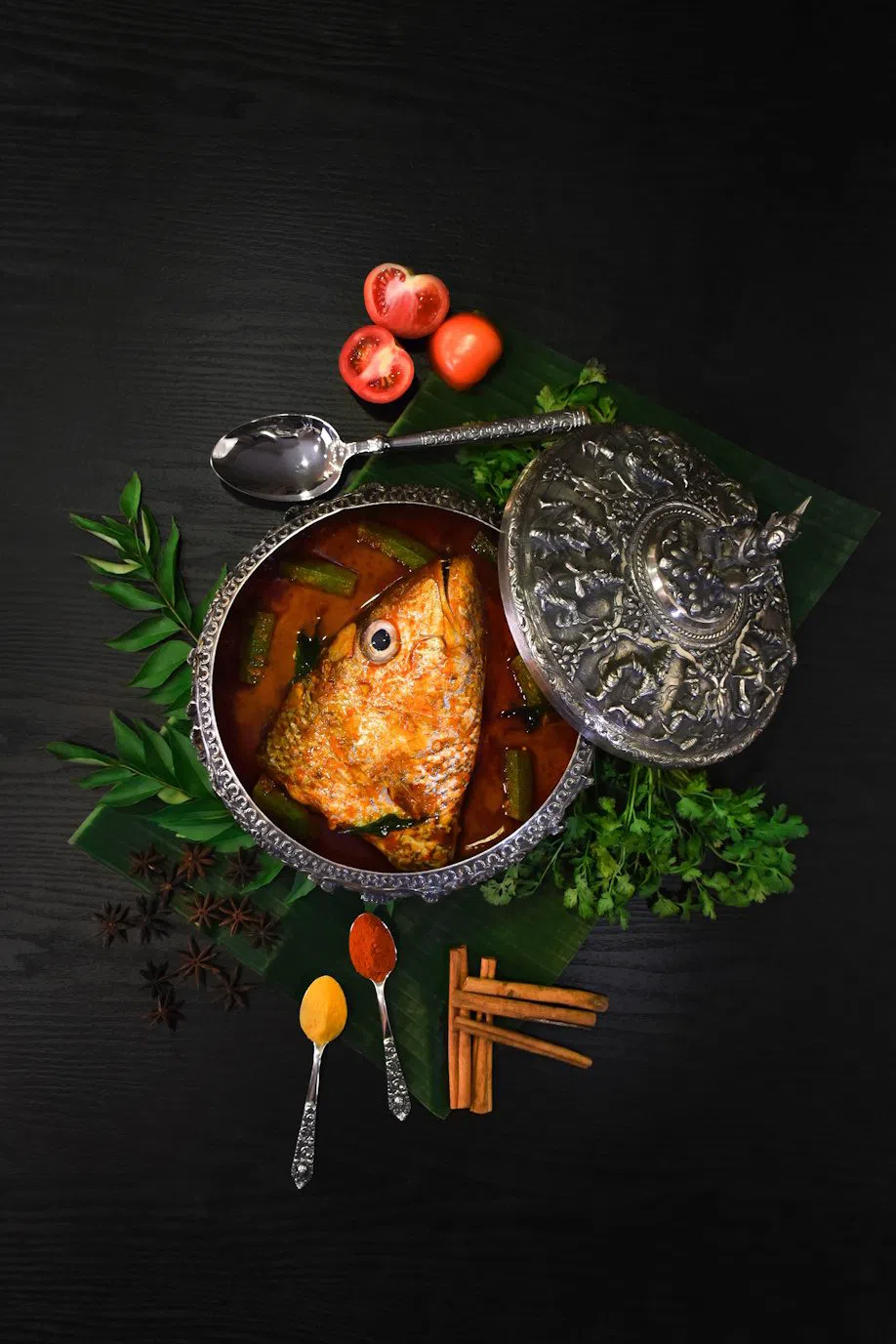
Muthu's Curry (Race Course Road) is the other half of the district's fish-head rivalry: drier, more peppery, and with the most seating in Little India at the flagship. It takes reservations including large parties, which makes it the one to hold a table at if your group wants air-conditioning and certainty. S$25 to S$45 a head.
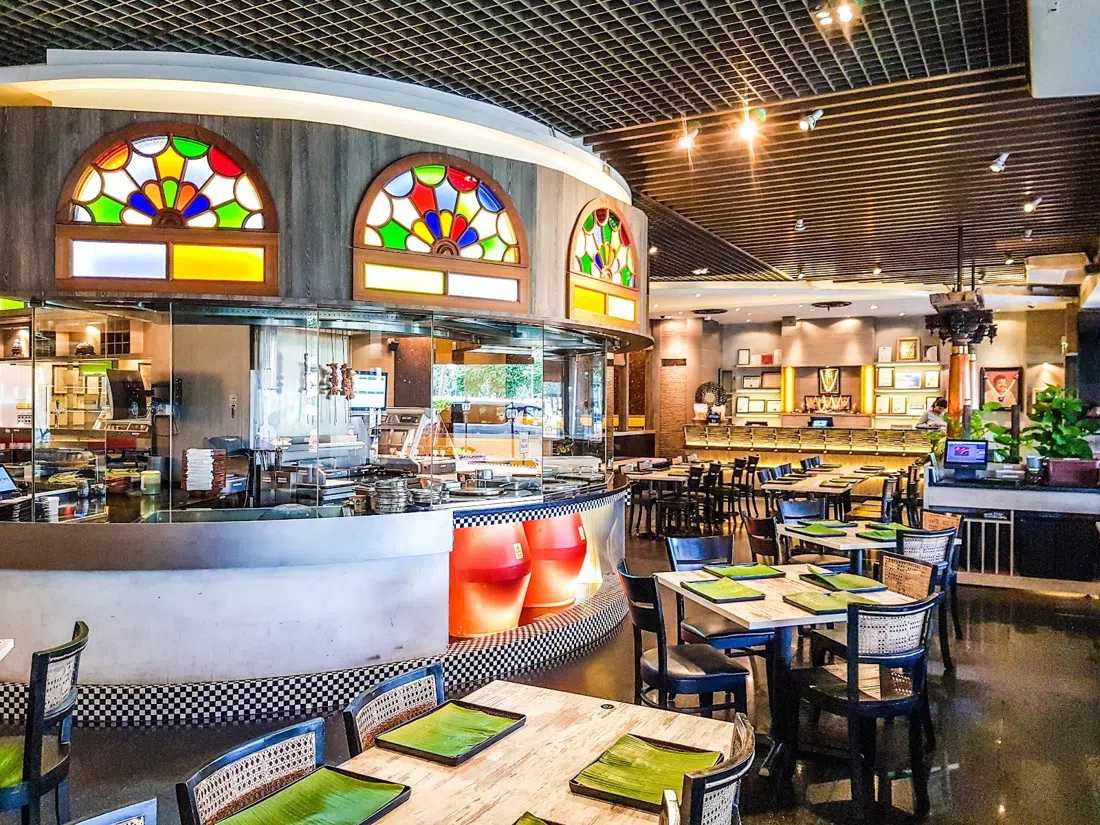
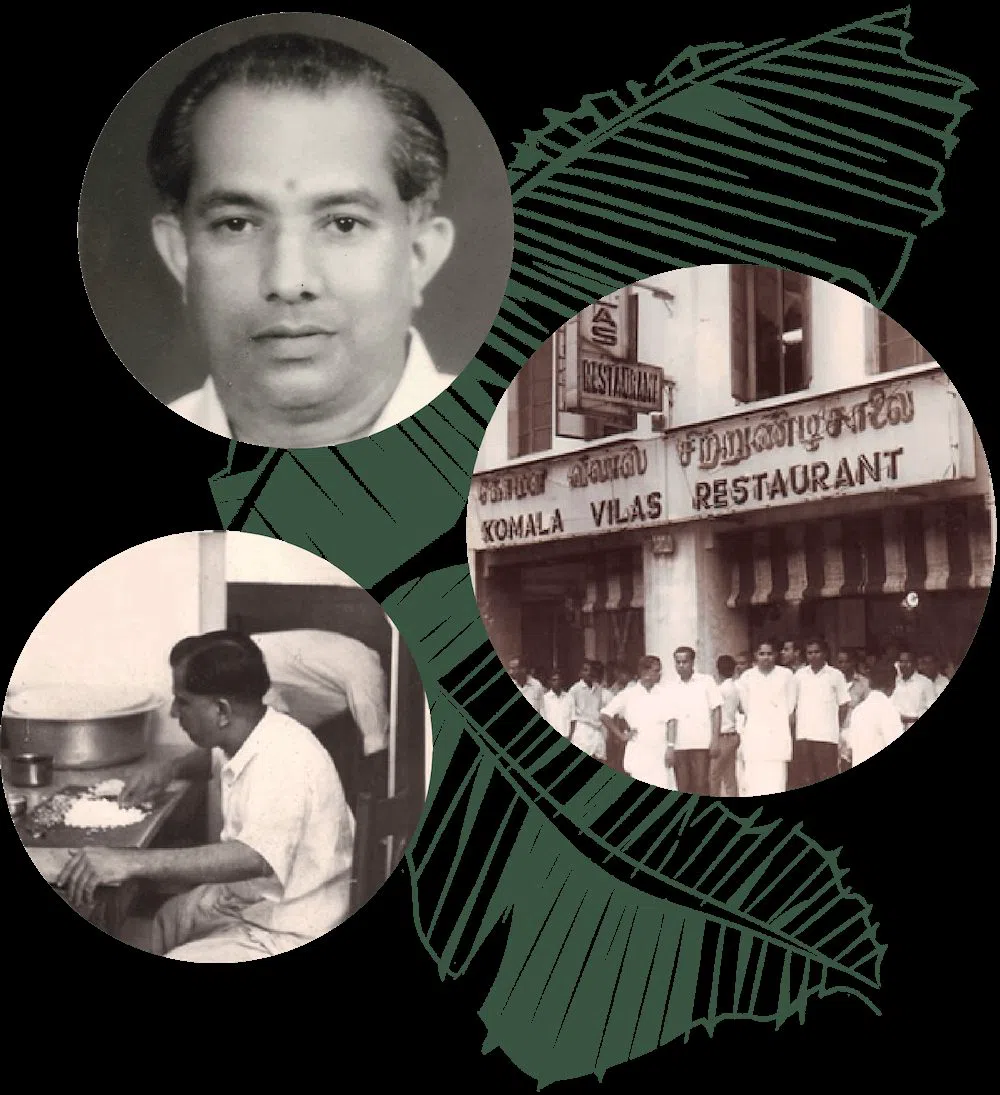
Komala Vilas (Serangoon Road) has been open since 1947 and remains the cheapest honest meal on the street at S$6 to S$15 a head. Vegetarian throughout, which makes it the safe default when your group has three different diets in it. Walk-in only, turnover is quick, and you will share the room, so avoid the 12pm to 2pm crush if you want to hear each other.
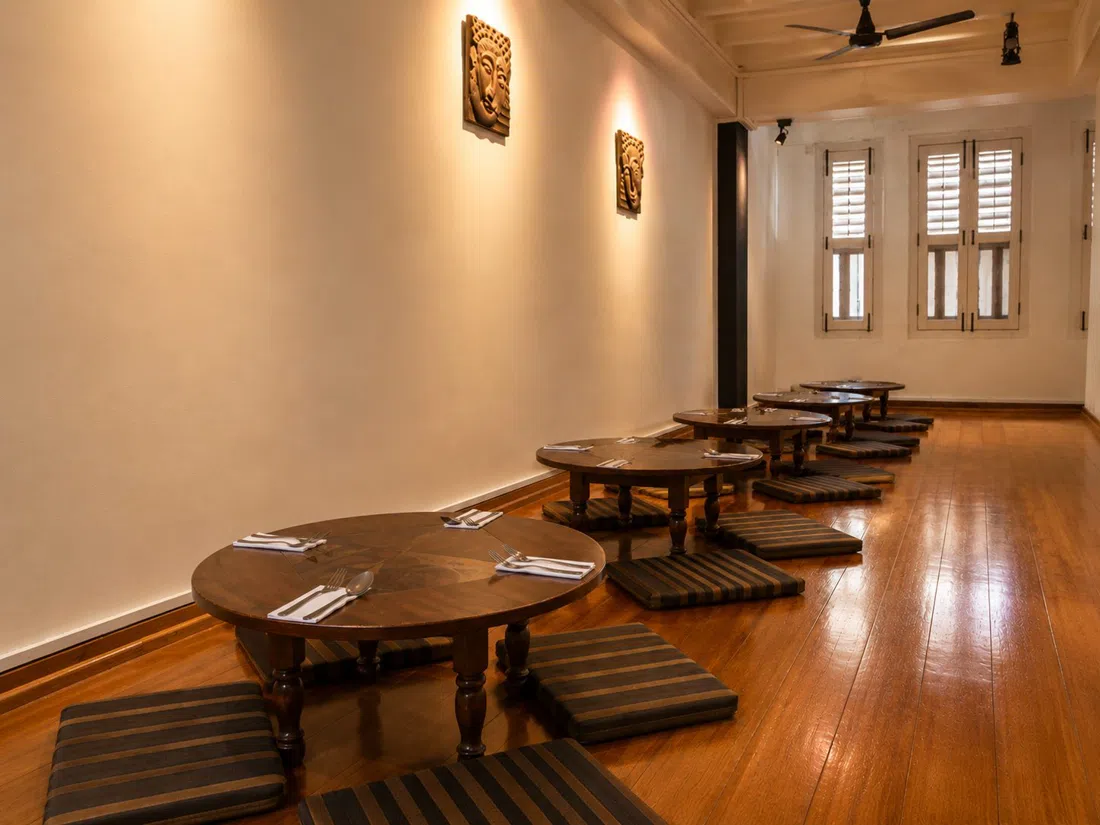
Lagnaa Barefoot Dining (Upper Dickson Road) takes reservations with a deposit credited to the bill, and its barefoot upper floor with floor seating is the best private-feeling space in the district for a group of six to twelve. The chilli-challenge gimmick is real, the cooking underneath it is serious, and S$30 to S$50 a head is fair for what arrives. Ask for upstairs if conversation matters.
Coffee in the afternoon, beer at the end of it
September afternoons in Singapore are hot and frequently wet, and the sensible plan is to be indoors between roughly two and four. Chye Seng Huat Hardware (Tyrwhitt Road, Jalan Besar) is a ten-minute walk from the temples and is where to sit out the worst of it: a specialty roastery in an old hardware building, coffee S$6 to S$12, food S$15 to S$25. The horseshoe bar suits a pair, the back courtyard takes six or more. No bookings, and it is closed on Mondays, so do not build a Monday around it.
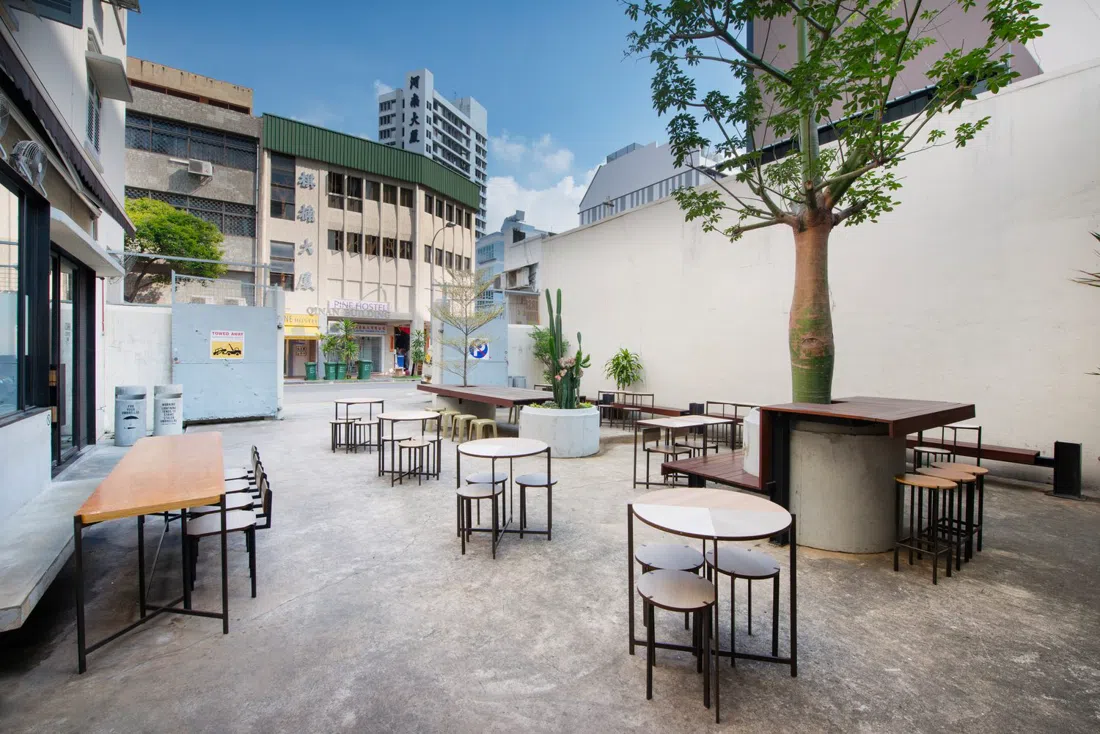
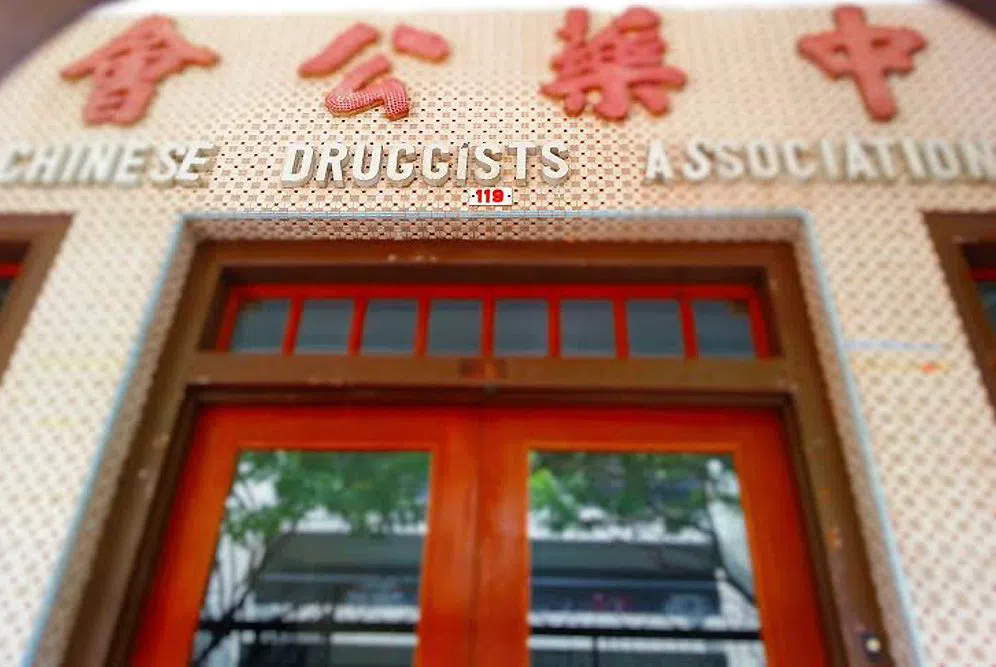
Little India proper is largely dry, which surprises people planning an evening. Druggists (Jalan Besar), a taproom on the district's edge, is where the night ends, with pours at S$12 to S$18, natural wines and non-alcoholic options. Walk-in and group-friendly, but reserve the larger tables ahead on Friday and Saturday.
Two in the morning at Mustafa
Mustafa Centre (Syed Alwi Road) went back to genuine round-the-clock trading in September 2024, which makes it the one thing in Little India you can do at 2am. There is no door policy of any kind; there is a bag check on the way in and a sealed-bag rule for anything you bought elsewhere. Entry is free and goods start at a few dollars.
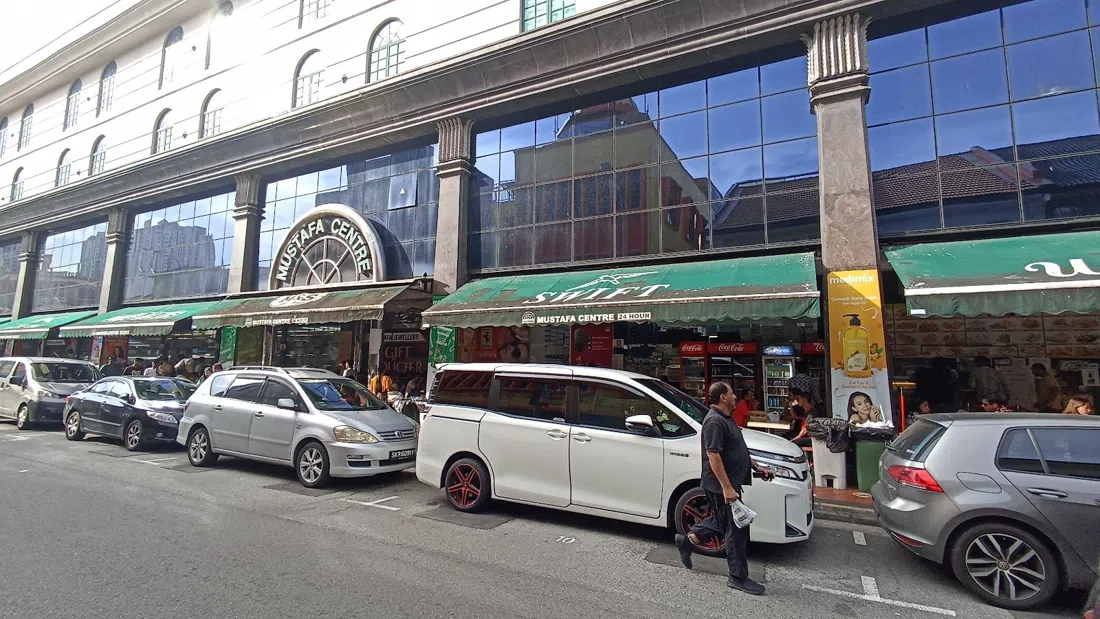
The aisles are too narrow to move through as a group, so agree a meeting point and a time before you go in and then let everyone disperse. It is chaotic and cheap, and at one in the morning it is the best people-watching in the city. It is also the reason a late flight out of Singapore is not a wasted evening.
Best time to go in September
September sits in the wetter, stickier part of the Singapore year: hot from mid-morning, humid all day, with thunderstorms that tend to arrive in the afternoon and clear within an hour or two. None of that closes anything, but it does decide the order of a good day.
The best window by a distance is 6.30am to 9.30am. The market is real, the light on Kerbau Road is soft, the temples are at their calmest, and you will be finishing breakfast as the first tour groups arrive. The second-best window is after 8pm, when the shopfronts are lit, the heat has dropped, and the restaurants have their proper rhythm.
Avoid 12pm to 3pm outdoors. That is the hour for the Indian Heritage Centre, an air-conditioned lunch, or a coffee on Tyrwhitt Road while the rain passes. The temple pujas around midday and in the evening are services rather than scheduled events, so plan to be respectfully at the back or somewhere else entirely.
Deepavali falls in November in 2026, so the Serangoon Road light-up will not be up while you are here. If arches of lights are what you came for, that is a different trip. What September gives you instead is a district behaving normally, which is the better version anyway.
Walking it yourself versus taking a guide
Almost everything in this guide is free at the door. The temples cost nothing, the mosque costs nothing, the villa is a pavement, the arcade and Mustafa charge for goods and not for entry, and the only fixed admission is a few dollars at the Indian Heritage Centre. There are no advance tickets to buy and no queues to skip. Turning up is the whole procedure.
A guided option is worth considering for one specific reason: the district's food and devotional life are hard to read from outside, and a good guide gets you across thresholds you would hesitate at alone. Guided walks here run seven days a week and start from around 68 USD per person, and the bookable experiences covering this area have drawn 10,010 traveller reviews between them, with the top-rated one at 5.0 out of 5 from 6,514 reviews. Book ahead if your dates are fixed; otherwise walk it yourself and spend the money on dinner.
Is it worth it
Yes, with a condition attached. Little India is worth a morning to almost anyone and worth a full day to people who like markets, temples and eating standing up. It is not a curated attraction and it will not perform for you; what it offers is a genuinely functioning district with four faiths, a wet market, a 1960s garland shop and a 24-hour department store inside a twenty-minute walk.
It suits independent walkers, food-led travellers, photographers who are willing to get up early, and anyone with a long layover or a late flight, and it works reasonably well for families on a weekday morning and badly on a Sunday afternoon. Large groups will find it hard work at any weekend hour, and the honest advice for a party of eight or more is to book a table, split into twos for the shops, and use the Perumal courtyard rather than the Veeramakaliamman forecourt as your regrouping point. If you want an air-conditioned, low-friction, sit-down version of Singapore, this is not that district and you should not pretend otherwise.
Practical notes
Getting there. Little India MRT (North East and Downtown lines) is the main door; Rochor, Farrer Park and Jalan Besar cover the edges. Trains run from around 5.30am to just past midnight. Use a contactless bank card or phone directly at the gates; there is no need to buy a transit card for a short stay. Do not drive in, as parking around Serangoon Road at a weekend is a waste of an hour.
Cash. Cards work in the restaurants, Mustafa and the Heritage Centre. Carry S$50 to S$80 in small notes anyway for hawker stalls at Tekka, garlands, henna and the smaller arcade traders, several of whom are cash-first.
Timing. Temples and the market reward early. The mosque only admits visitors roughly 10am to 12pm and 2pm to 4pm and is closed Friday. The Temple of 1000 Lights shuts around 4.30pm. The Heritage Centre is closed Mondays with last entry 5.30pm, and the Tyrwhitt Road cafe is closed Mondays too, so a Monday itinerary here needs rearranging rather than improvising.
Budget. A realistic day: S$5 admission, S$6 to S$15 for a vegetarian lunch or S$20 to S$45 for a banana-leaf dinner, S$6 to S$12 for coffee, S$12 to S$18 a beer at the edge of the district, plus whatever the bangles do to you. Two people can eat and see everything here on well under S$100 between them if they skip the fish-head curry, and should not skip the fish-head curry.
Where to stay. Sleeping in or beside the district puts you on the street at six in the morning, which is the entire argument for it; the trade-off is noise and a room rate that reflects how central this is. Compare rates and locations with a Singapore hotel search, and read the wider Singapore guide if you are building the rest of the trip around this morning.
Manners, briefly. Shoes off where shoes come off. Shoulders and knees covered in the temples and the mosque. Ask before photographing people at prayer, at work, or in a doorway, and when you are told no, that is the end of it. It costs nothing and it is the difference between a visitor and a nuisance.